

The CopernicusLAC Panama Centre successfully hosted its first Community Event as part of the CAF International Economic Forum 2026, marking a key milestone in strengthening regional cooperation on disaster risk management, climate resilience and sustainable development across Latin America and the Caribbean.
The event gathered representatives from the public sector, academia, civil society, the private sector, and international partners. Its aim was to strengthen partnerships, expand the user community and accelerate the uptake of Earth Observation open data from Copernicus in decision-making and disaster risk reduction.
The programme combined high-level institutional interventions, a strategic roundtable with the Steering Committee of the CopernicusLAC Panama Centre, multi-stakeholder panels, a technical panel featuring country experts and hands-on demonstrations on the CopernicusLAC Earth Observation services. Together, these elements reinforced the link between public policy priorities, operational needs and the practical use of Earth Observation information.
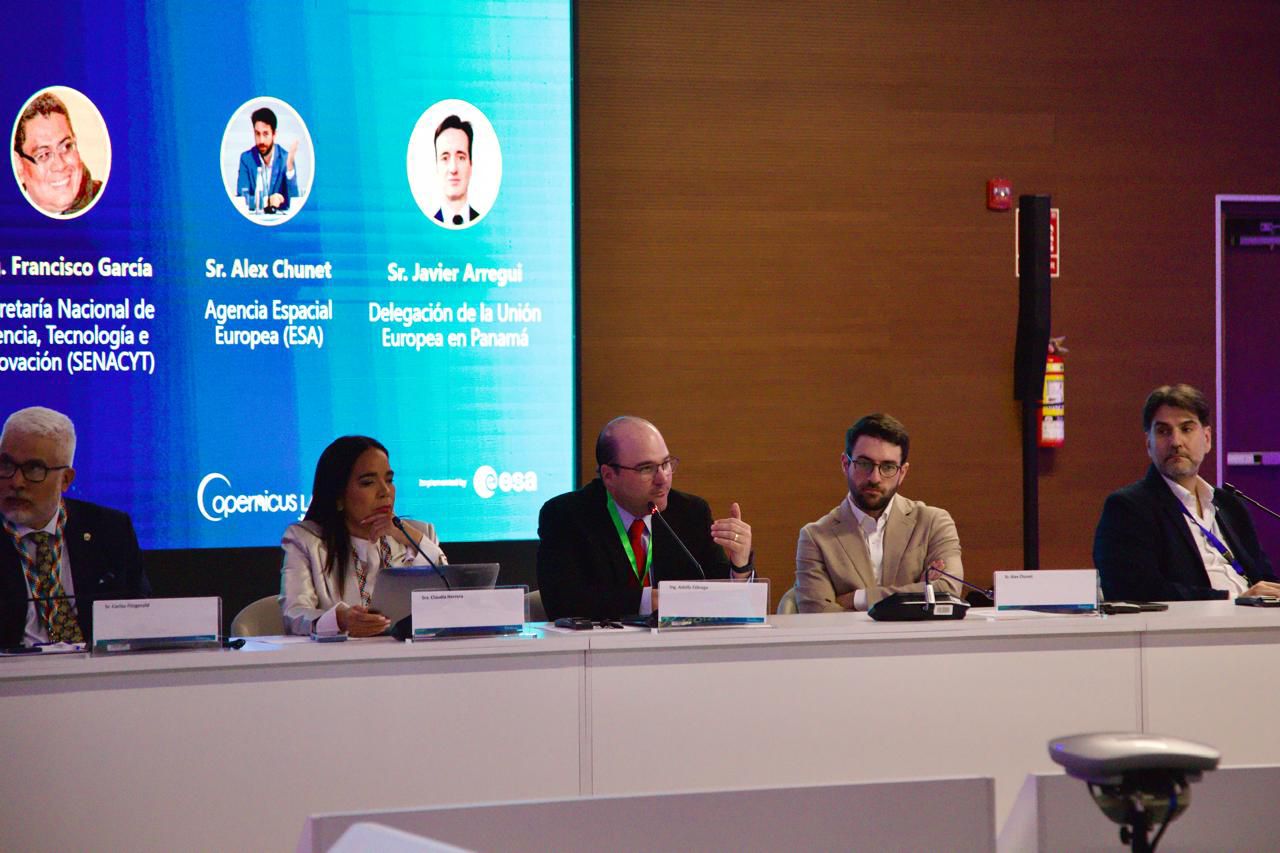 From left to right: Mr Carlos Fitzgerald, Director of Cooperation at Panama’s Ministry of Foreign Affairs (MIRE); Dr Claudia Herrera, Stakeholder Liaison Officer at the CopernicusLAC Panama Centre; Eng. Adolfo Fabrega, Administrator of the National Authority for Government Innovation (AIG); Mr Alex Chunet, Earth Observation Applications Specialist at the European Space Agency (ESA); and Mr Angel Cardenas, Manager for Sustainable Infrastructure at CAF.
The opening remarks were delivered by representatives of the European Space Agency (ESA), Panama’s National Authority for Government Innovation (AIG), the Delegation of the European Union to Panama, the Ministry of Foreign Affairs of Panama (MIRE) and the National Secretariat for Science, Technology and Innovation (SENACYT). Speakers highlighted the strategic value of Copernicus in supporting disaster-resilient development across the region.
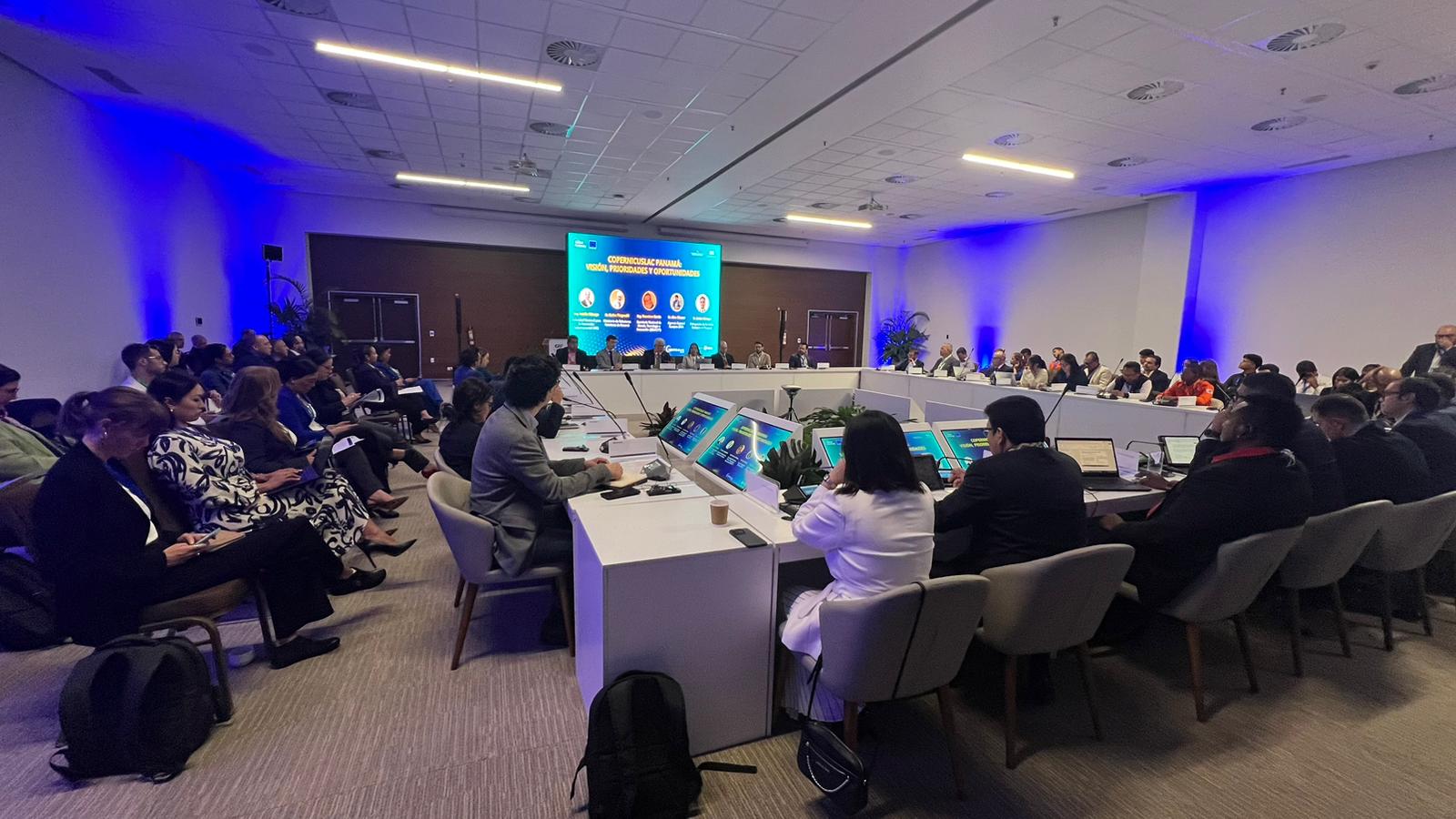 The technical sessions featured contributions from multilateral, international humanitarian organisations, and national and regional civil protection, disaster risk management and meteorological institutions. Research centres, universities, specialised companies, as well as academic and youth networks, also took part.
Technical sessions focused on international and subregional coordination, capacity development and the impact of operational Earth Observation services. These sessions featured contributions from multilateral organisations such as the United Nations Office for Disaster Risk Reduction (UNDRR) and the United Nations Environment Programme (UNEP), international humanitarian organisations such as the Directorate-General for European Civil Protection and Humanitarian Aid Operations (DG ECHO), and national and regional civil protection, disaster risk management and meteorological institutions including the Coordination Center for the Prevention of Disasters in Central America and the Dominican Republic (CEPREDENAC), the National Unit for Disaster Risk Management of Colombia (UNGRD), the National Coordination Agency for Disaster Reduction of Guatemala (CONRED) and the Caribbean Institute for Meteorology and Hydrology (CIMH), among others. Research centres, universities, specialised companies, as well as academic and youth networks, also took part.
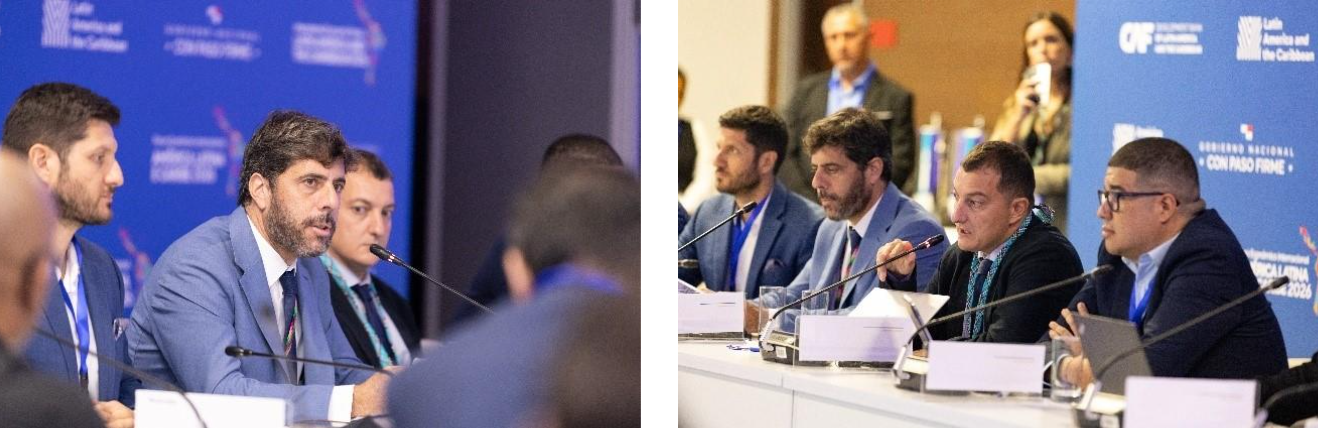 Mr Javier Neme, UNEP representative (left), and Mr Luigi Pandolfi, Director of DG ECHO’s Latin America and Caribbean Office.
One of the highlights of the event was the technical panel of country experts, which showcased the CopernicusLAC EO services developed over the past two years in collaboration with disaster risk management and civil protection authorities across the region. Panellists presented operational experiences and use cases of the Centre’s EOservices in areas such as floods, wildfires, landslides, ground movement and economic value mapping, demonstrating their strong potential for replication in different national contexts.
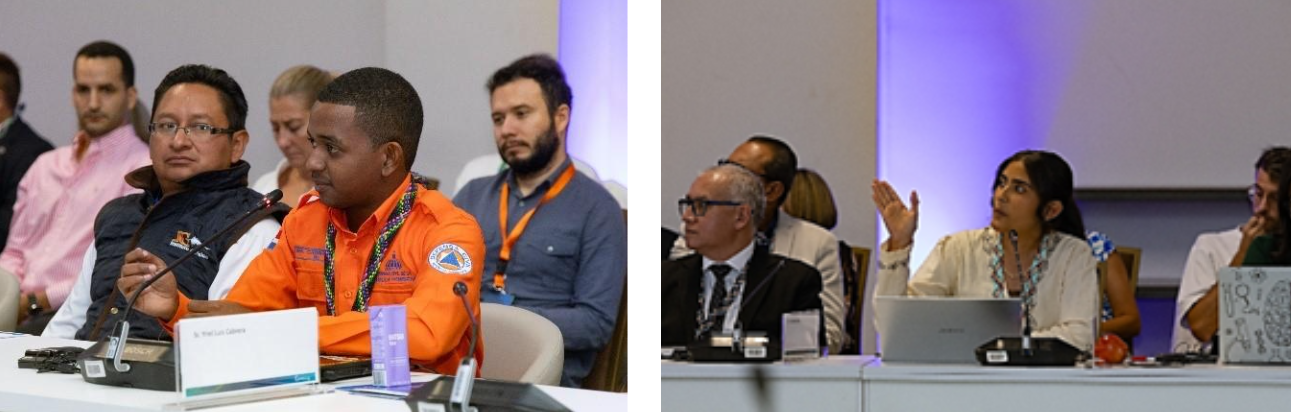 Mr Yriel Luis Cabrera from the National Emergency Commission (CNE) of the Dominican Republic (left) and Ms Aura Catalina Franco from Colombia’s National Unit for Disaster Risk Management (UNGRD) (right) were among the seven experts on the technical panel, sharing their experience in the development of the Centre’s EO services.
A notable highlight of the day was provided by two students affiliated with GEOLAB, the Youth Network for Remote Sensing. Their remarks emphasised the critical roles of training, technological advancement, and youth involvement in effectively addressing climate-related challenges in Latin America and the Caribbean.
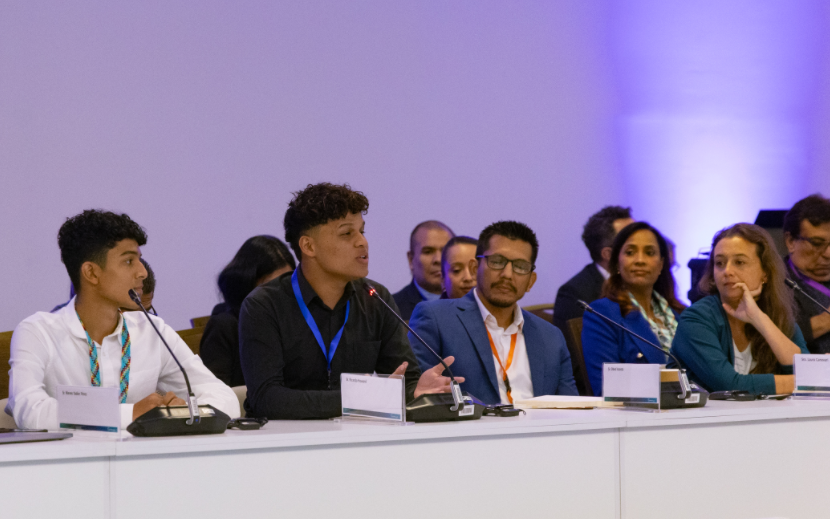 Mr Ricardo Howard, student and member of the Youth Network for Remote Sensing – GEOLAB
Overall moderation of the event was led by Dr Claudia Herrera, Stakeholder Liaison Officer at the CopernicusLAC Panama Centre, ensuring coherence between institutional, technical and community perspectives. Herrera emphasised that “economic development, risk reduction and climate resilience cannot be addressed in isolation, but rather require evidence-based decision-making, regional cooperation, and technical instruments that align public policy with territorial realities.”
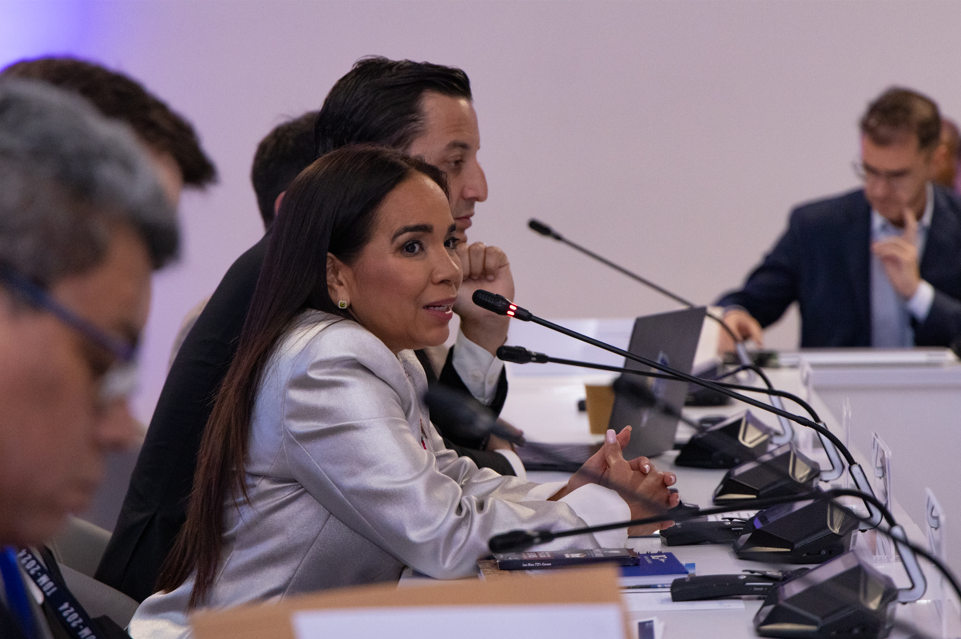 Dr Claudia Herrera, Stakeholder Liaison Officer at the CopernicusLAC Panama Centre, moderated the different panels throughout the event.
This first Community Event reaffirmed the role of the CopernicusLAC Panama Centre as a hub for regional collaboration, dedicated to promoting the sustainable uptake of Copernicus data and services and to turning knowledge into concrete action to build a more resilient future for Latin America and the Caribbean.
Background information
The activities of the CopernicusLAC Panama Centre fall within the overall context of the EU-LAC Digital Alliance, which is a strategic framework to promote cooperation between the European Union (EU) and the Latin America and Caribbean (LAC) region on digital and space issues under the umbrella of the EU Global Gateway strategy. In this context, the European Space Agency (ESA) coordinates the implementation of the Centre on the basis of a Contribution Agreement with the Directorate General for International Partnerships (DG INTPA) of the European Commission, and in close collaboration with the Government of Panama, the MIRE (Ministry of Foreign Affairs) and the SENACYT (National Secretariat for Science, Technology and Innovation).