


To mark the International Day for Disaster Risk Reduction, the European Commission hosted the 2nd High-Level CopernicusLAC Policy Dialogue on Earth Observation in Brussels. The event marked a decisive step in trans-regional cooperation between the European Union (EU) and Latin America and the Caribbean (LAC) in tackling climate crises and disasters with systemic impact.
Organised by the CopernicusLAC Panama Regional Centre, an initiative implemented by the European Space Agency (ESA) for the European Commission’s Directorate-General for International Partnerships (DG INTPA), in close collaboration with the Government of the Republic of Panama (through its Ministry of Foreign Affairs, the AIG and SENACYT), this high-level meeting took place in the framework of the EU-LAC Digital Alliance and the Global Gateway strategy.
The meeting, which brought together representatives from eight LAC countries, Panama, Guatemala, Chile, Mexico, Ecuador, Honduras, Suriname and Cuba, picked up the agreements reached at the first Policy Dialogue, held in Antigua, Guatemala, in 2025. It made decisive progress from political statements towards their incorporation into institutions, lasting cooperation and the practical use of satellite information in the region.
The event featured prominent trans-regional institutional representation. The opening session was led by Diana Montero Melis, Deputy Head of Unit at DG INTPA; Armando Guillén, Chief of Staff of the Ministry of Foreign Affairs of the Republic of Panama; and Simonetta Cheli, Director of Earth Observation Programmes at ESA.
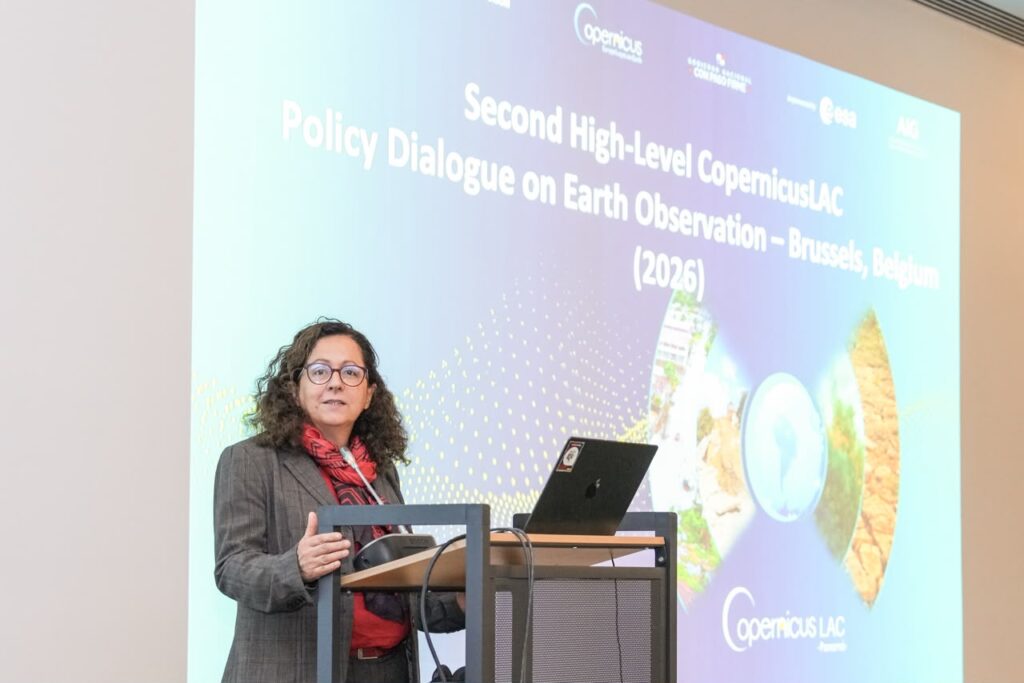
The programme continued with a high-level address by H.E. Karin Herrera, Vice President of the Republic of Guatemala. This was followed by a presentation of the CopernicusLAC Panama Centre’s contribution to disaster risk reduction by Juan Ardila, the Centre’s Operations Manager, and Benjamin Koetz, Head of the Long-Term Action Section at ESA-ESRIN, moderated by Claudia Herrera, Stakeholder & Liaison Officer at the CopernicusLAC Panama Centre.
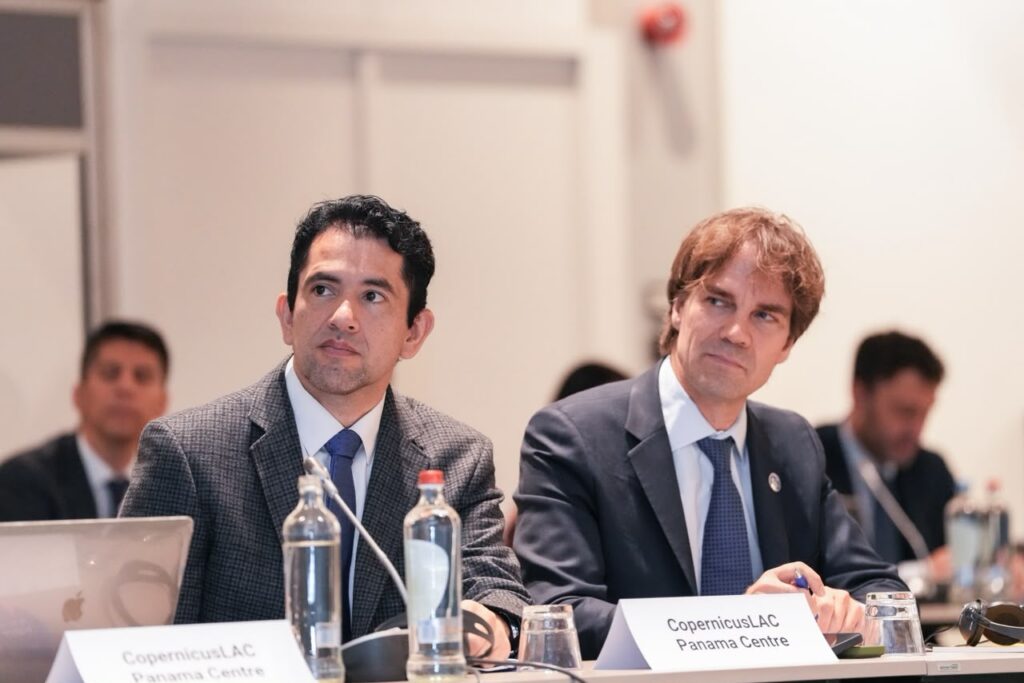
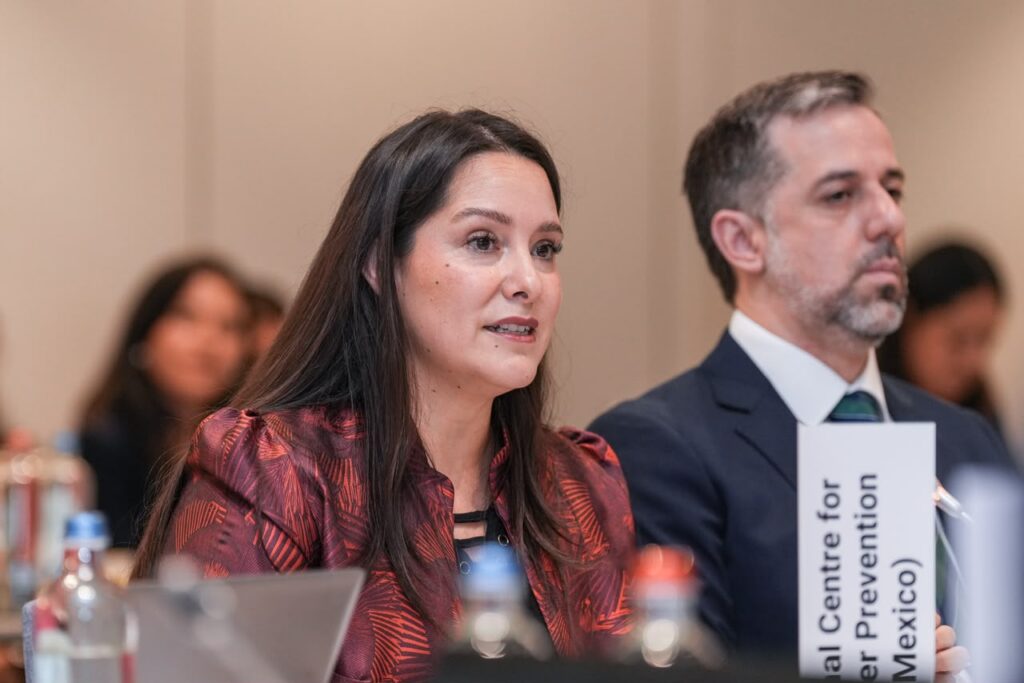
The open dialogue with national governments brought together representatives of technical and civil protection bodies from the region, including Felipe Riquelme Vásquez, Deputy Director for Disaster Risk Reduction at SENAPRED, Chile, and Constanza Anahí Elsa Rivera Pereira, Coordinator for Public Policy and Disaster Prevention at CENAPRED, Mexico (the National Disaster Prevention Centre); and Colonel Gloria Gely, Head of the DRR Department of the National General Staff of Civil Defence of the Republic of Cuba, together with ambassadors and diplomatic missions from Latin America and the Caribbean.
A Milestone on the International Day for Disaster Risk Reduction
That the event coincided with the International Day for Disaster Risk Reduction underlined the urgent need to equip public institutions with operational, evidence-based tools to anticipate and manage disaster risks in a changing global environment.
During the discussion sessions, participants analysed how Latin America and the Caribbean face a scenario of growing vulnerability, heightened by extreme phenomena such as El Niño. Its hydroclimatic fluctuations have caused cascading impacts (prolonged droughts, wildfires, water stress and severe flooding) that directly affect food security, ecosystems and critical cross-border infrastructure. In this context, Earth Observation (EO) through the Copernicus programme was reaffirmed not only as an emergency response tool, but also as a cornerstone of land-use planning, resilient development and anticipatory preventive action.
Outcomes of the Dialogue: Towards the “Brussels Conclusions”
Over the course of the morning, exchanges between government authorities, space agencies, financial institutions and international organisations made it possible to identify strategic priorities organised around key themes:
- Integrating Earth Observation into systemic risk governance: Participants stressed the need to translate global technological capabilities and open data ecosystems into operational services tailored to the real needs of LAC countries, strengthening the technical and thematic role of the CopernicusLAC Regional Centre in Panama.
- Adoption and institutionalisation in public policy: Participants agreed that the effectiveness of satellite technology lies in its formal incorporation into action protocols, emergency operations centres, national regulatory frameworks and climate change adaptation strategies.
- International cooperation and financial sustainability: The multilateral roundtable, with contributions from Andrea Koulaimah (Director at DG ECHO), and David A. Farrell (Director of the Caribbean Institute for Meteorology and Hydrology, CIMH), as well as representatives of development banks and European space agencies, explored long-term sustainability mechanisms and co-financing schemes to ensure the continuity of these essential services.
- Global and regional synergies: The discussions reinforced the links between the Copernicus programme, the Sendai Framework for Disaster Risk Reduction, the 2030 Agenda and the EU-LAC Memorandum of Understanding on Disaster Risk Management.
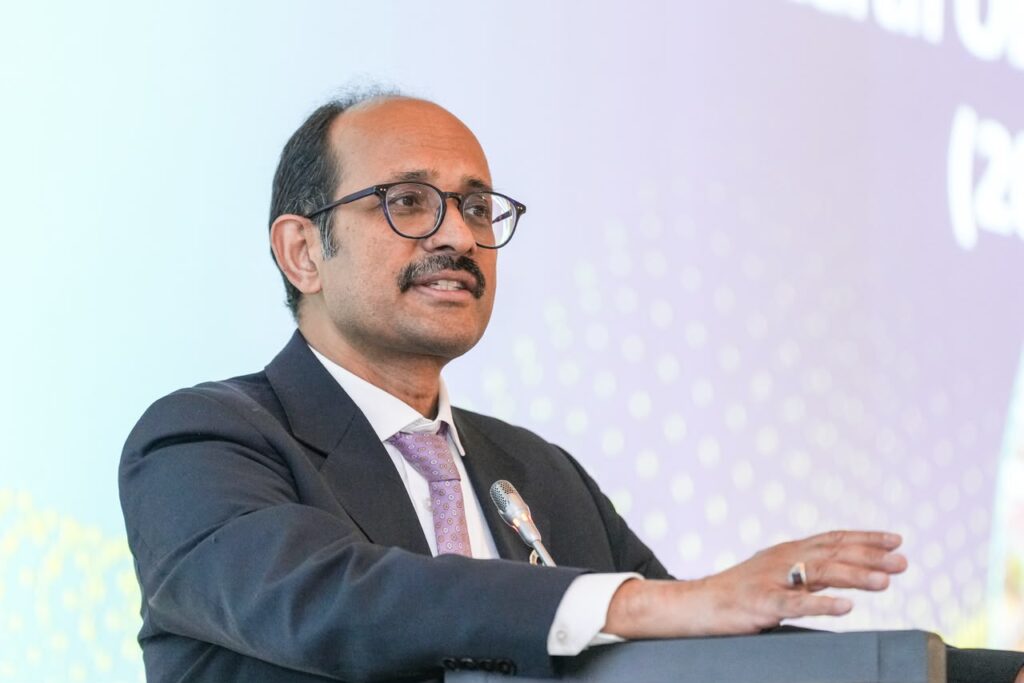
The closing session featured a keynote address by Kamal Kishore, Special Representative of the United Nations Secretary-General for Disaster Risk Reduction and Head of UNDRR, followed by closing remarks from Diana Montero Melis (DG INTPA).
At the end of the meeting, the “Brussels Conclusions” were drawn up: a guiding document setting out the key messages and priority actions agreed by the participants. These conclusions will serve as input for raising Earth Observation recommendations in high-level bi-regional governance forums, such as the Ibero-American processes, discussions at the Climate Conferences (COP) and multilateral development forums.
With the holding of the second High-Level Policy Dialogue, the European Union and Latin America and the Caribbean reaffirmed their strategic partnership to turn space technology into a genuine public good in the service of protecting life, livelihoods and the sustainable development of the region.
Background information
The activities of the CopernicusLAC Panama Regional Centre are developed in the framework of the EU-LAC Digital Alliance, which is a strategic framework to promote cooperation between the European Union (EU) and the Latin America and Caribbean (LAC) region on digital and space issues under the umbrella of the EU Global Gateway strategy. In this context, the European Space Agency coordinates the implementation of the Centre on the basis of a Contribution Agreement with the Directorate General for International Partnerships (DG INTPA) of the European Commission, and in close collaboration with the Government of Panama, the Ministry of Foreign Affairs (MIRE), the Government Innovation Agency (AIG), and the SENACYT (National Secretariat for Science, Technology and Innovation).